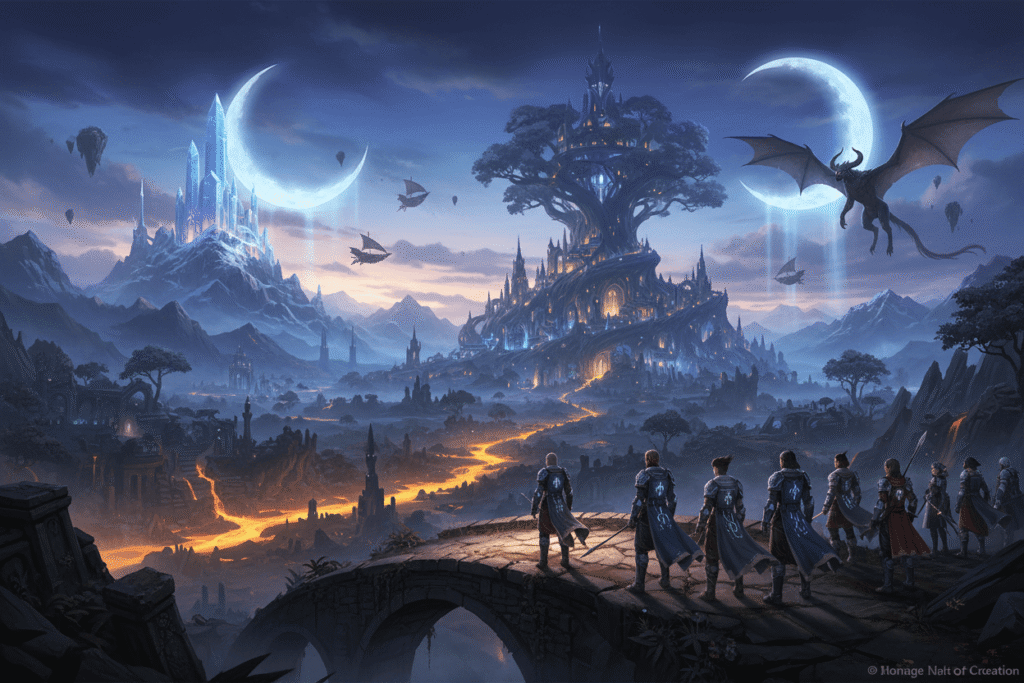
Ashes of Creation does not chase trends. It challenges memory. It reaches back to a time when online worlds felt dangerous, mysterious, and alive. Yet it carries modern ambition in every system it builds. This is not a theme park MMO. This is a breathing land that remembers what players do. The game invites players into Verra, a world that rises from ruin. Civilizations once flourished here. They fell. Now humanity returns, uncertain but hopeful. Every step forward reshapes the land. Every choice leaves a mark. Ashes of Creation wants players to feel small and powerful at the same time. Small inside a vast world. Powerful because their actions matter. That idea becomes the heart of everything.
Ashes of Creation Builds a World That Watches You
Most online games place players inside a finished world. Ashes of Creation refuses to do that. It begins with wilderness, empty roads, broken ruins, and silent valleys. Players wake these places through activity. Hunting brings travelers. Crafting attracts traders. Exploration draws settlers. Small camps become villages. Villages become towns. Towns grow into cities. Nothing rises by accident. Nothing exists without reason. When players abandon an area, growth stops. When war destroys a city, ruins return. The land remembers success. The land remembers failure. This system creates something rare. A sense of ownership. Players do not just live in Verra. They build Verra.
Ashes of Creation Turns Choice Into Consequence
Many games offer choices. Few enforce consequences. Ashes of Creation embraces consequence with courage. Support one city and another may suffer. Protect trade routes and wealth grows. Ignore them and poverty spreads. Political leaders rise from player support. Guilds gain influence. Rivalries form naturally. No invisible hand resets mistakes. No hidden script protects comfort. If players choose peace, peace shapes the world. If players choose war, war scars the land. This design creates emotional investment. Victories feel personal. Losses hurt longer. The world does not forget what happened yesterday. That memory gives weight to tomorrow.
Ashes of Creation and the Soul of Combat
Combat in Ashes of Creation walks a careful line. It feels immediate. It also feels tactical. Players dodge. They aim. They time abilities. Yet strategy still matters. Group composition matters. Positioning matters. Classes emerge from combining two archetypes. A fighter may gain magic. A healer may embrace stealth. A tank may wield arcane power. This system encourages creativity. No path feels forced. No build feels identical. The result feels organic. Like personalities taking form. Like stories shaping themselves through playstyle.
Why Ashes of Creation Feels Like a Promise
Ashes of Creation feels less like a product and more like a promise. A promise that online worlds can matter again. A promise that community still holds power. A promise that danger creates meaning. The game does not promise perfection. It promises possibility. It invites players to argue, to build, to destroy, and to rebuild. It invites players to write history together. In a time where many games fear inconvenience, Ashes of Creation embraces it, because inconvenience creates stories and friction creates bonds. Verra will not belong to developers once it launches. It will belong to its people. Every city skyline will tell a different tale. Every server will carry its own legends. Ashes of Creation does not aim to be the biggest MMO. It aims to be the most remembered. And in a genre built on memories, that goal matters more than anything.
About the Author